


What is a visa?
A visa is an authorisation allowing an individual to enter a particular country. Traditionally it has taken the form of a stamp or sticker in the traveller’s passport, although increasingly countries may provide this authorisation using electronic methods.
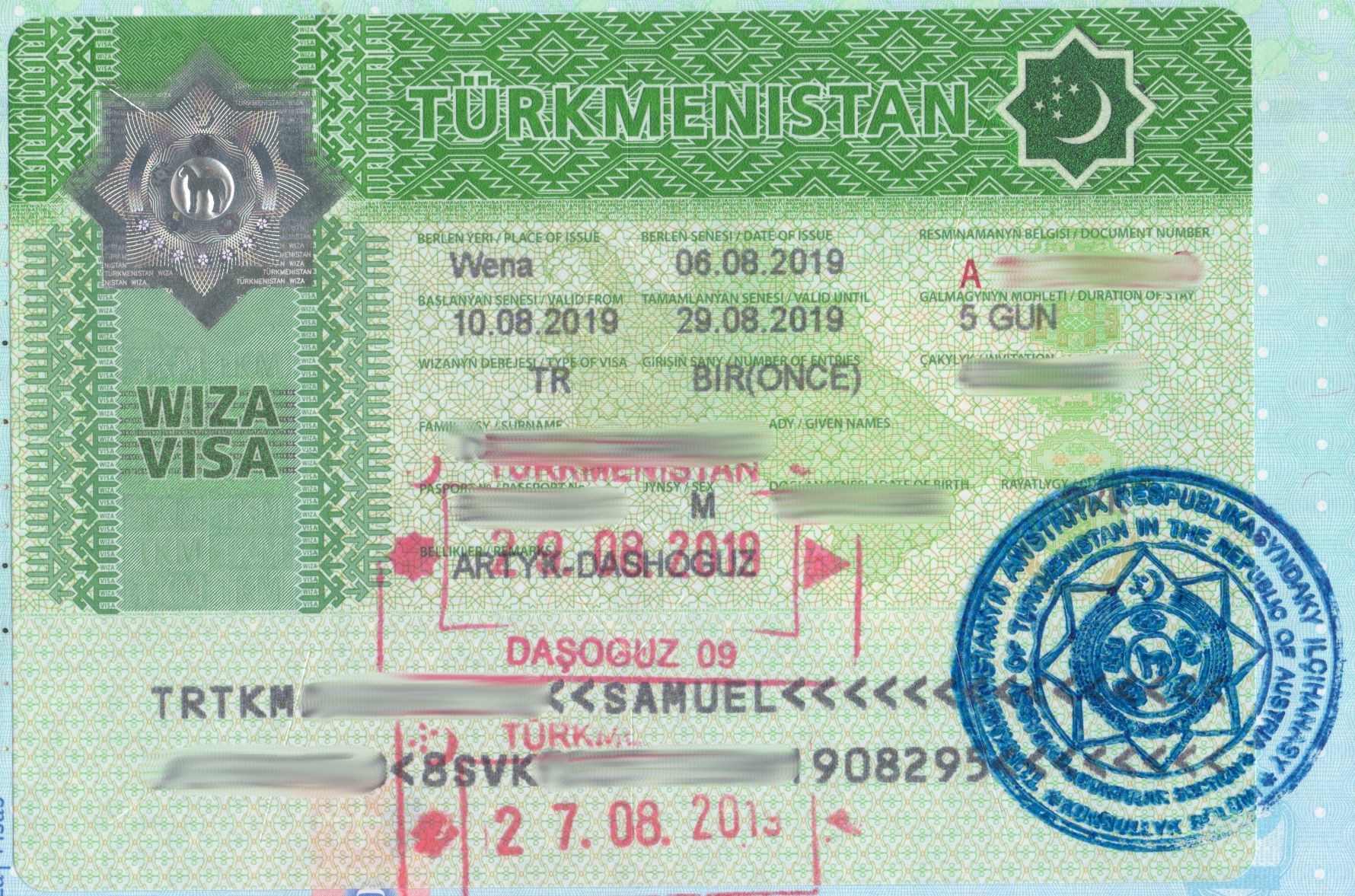
A visa sticker affixed to a page in a passport.
Getting a visa
Visas are generally issued by an embassy or consulate of the destination country.
Although procedures vary from country to country, in many cases a person must attend an embassy or consulate in person, where they will be interviewed by consular staff. Biometric information, such as fingerprints, may also be taken. The applicant’s passport will likely be retained by the embassy while background checks are made and a decision reached on their eligibility for a visa. It will be returned in due course via mail or courier along with a visa stamp or sticker, if approved.
In some cases, applicants may not be required to attend an embassy, but may apply for a visa by mail.
Visas differ from border passport stamps. An entry or exit stamp marked in a passport by a border official is proof that a person has legally entered or exited a country. Visas, where required, however, are a prerequisite to being admitted to a country. In other words, a visa indicates that a person can travel to a country, whereas an entry stamp shows they have been there.
Even so, the final decision as to whether a person is admitted to a country rests with the border authorities. In some rare cases, a person may have a valid visa but be refused entry at the border.
Electronic visas
Electronic visa schemes, sometimes known as eVisas, remove the need for applicants to visit an embassy or consulate to obtain a visa. Instead, individuals apply online through a website provided by the destination country. If the visa application is approved, an email confirmation is typically sent to the applicant. Upon arrival at the destination country, border officials can verify electronically whether the traveller has permission to enter. Some countries may require a printed copy of the email confirmation.



 Passports
 Destinations
 Articles
 About
About